


Everything you need to know about being Canadian....

Updated: Aug 12
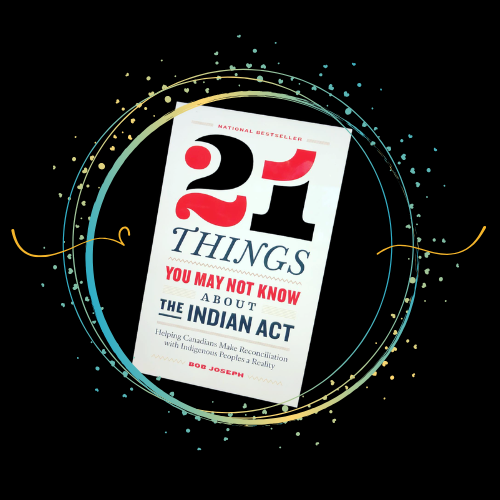
In her podcast with Austin Channing Brown, Brené Brown mentions that when she's reading a kick-ass, important book that makes her angry about the world, she throws it across the room. A book that's dog-eared and dented is one that has impacted her and changed her perception.
Although I studied colonialism and Canadian Indigenous history, there are still things I didn't know about the Indian Act. Studying history is vital to understanding where we came from and where we are now. Often Canadians pride themselves on not having had segregation laws — you know, like they did south of the border. But as I read Bob Joseph's book, I kept putting it down to process. The Indian Act very much served as segregation legislation.
It made me incredibly sad, because so much of how the Act was constructed served to shape how Indigenous and non-Indigenous peoples interacted — or didn't interact. Through the creation of reserves, the pass system (restricting people from leaving reserves without a written pass from an Indian Agent), the denial of political action, and barring Indigenous peoples from public spaces, Indigenous and non-Indigenous peoples have been kept apart since April 12, 1876.
The Indian Act very much served as segregation legislation.
Wow. No wonder reconciliation is so much work.
While many portions of this legislation have been changed — Indigenous people were granted the vote in 1960, and in 1985 Bill C-31 fixed the bias and restored status to Indigenous women, the Indian Act is still in effect today. It still results in imposed leadership systems, poverty, and infrastructure gaps, and the Government of Canada still holds ultimate oversight and authority over reserve lands, band bylaws, and the management of community funds — hello, Crown-Indigenous Relations and Northern Affairs Canada.
What stayed with me most, closing this book, is how much of this isn't history in the sense of being over. The Indian Act isn't a relic Canadians can point to and say "we don't do that anymore." It's a piece of active legislation still shaping who holds power over Indigenous lives and land, more than 150 years after it was written. Reading it laid out plainly, one provision at a time, made the scale of it land differently than any survey course ever did.
The Indian Act isn't a relic Canadians can point to and say "we don't do that anymore."
This is a book I'd put in the hands of any Canadian who thinks they already know this history — especially the ones, like me, who assumed they had a decent handle on it. Joseph's structure, 21 discrete, digestible entries, makes it hard to look away from any single piece, and easy to hand to someone who's never picked up a book on this subject before. Consider it required reading, and consider yourself warned: it will make you angry, and it should.
Would I throw this one across the room? Dog-ear it, more like. This is a book I'll be returning to.
P.S. If you're picking up a copy, consider buying it from Massy Books in Vancouver. It's a Nêhiyaw/Métis woman-owned and operated bookstore on the unceded and occupied territory of the xʷməθkʷəy̓əm (Musqueam), Sḵwx̱wú7mesh (Squamish), and səlilwətaɬ (Tsleil-Waututh) Nations, and the former site of k'emk'emeláy̓ village. And they're the first bookstore designated a Living Wage Employer — woot!


What an all-round article! You have been able to define the Canadian spirit with so much ease. Bringing in the aspect of book publishing at the halfway point was a great addition.